bradmeacham.com

  • First impressions of Maximum City

    Everyone I meet says this city used to be better.

    They lament the loss of “Bombay,” the former name of this city of 18 million. They criticize the real estate development, the pollution, the politics, the steady ethnic cleansing of Muslims and other minorities. In fact, I have yet to meet a native who thinks the city is improving, or even that it may be a better place someday.

    This grumpiness is common in leading cities, but it’s surprising coming even from the rich and powerful. The city’s many charms often go overlooked.

    No doubt Mumbai has a mixed reputation. When I told my friends that I was moving to India I could see a shadow come across their faces as they tried to decide if I faced a good fate or a bad one.

    Since arriving at the beginning of August 2019, my family and I have been getting situated in work and school, figuring out daily tasks like where to buy vegetables and where I can get a cheap buzz cut. As lovers of cities, we try to absorb as much as possible. On weekends we often pick a neighborhood and then go there, with some shop, gallery, or coffee shop as the tentative destination.

    Now, in mid-October, several aspects stand out:

    • The mix of people is astounding, despite the political currents nationwide and in Maharashtra specifically. Walking the streets around Mani Bhavan it’s easy to imagine how bucolic the Gamdevi area must have been when it was an elite enclave. Today the symbol of embattled Gandhian secularism is adjacent to the Parsi area of Kemps Corner and the devotees visiting Babulnath temple.

    • It’s an architectural madhouse, with Victorian era structures whose faded walls hold untold stories, to the breeze-kissed art deco around Churchgate, to the under-appreciated Charles Correa structures and urban plans. The city isn’t pretty — my apartment looks across a dead river and shanties, at an oil refinery flame burning 24×7 — but the scale is energizing.

    • On the one hand, the sheer size of population is depressing in the context of the global climate crisis. But it’s fascinating if you try to imagine what’s happening inside all those brains. I’m influenced by the Kate Boo’s Behind the Beautiful Forevers, but it stands to reason that each person is an individual with thoughts and dreams and disappointments. A recent newspaper headline (“From Garibi Hatav Nagar to Garib Nagar”) laments how one slum formerly known literally as “Poverty Elimination Town” still lacks reliable water and sufficient toilets after a generation and is now just called “Poverty Town.” The day-to-day resilience of the millions of residents at the bottom of the economic ladder is inspiring.

    • Democracy, though flawed, remains vibrant. Bookstores feature shelves groaning with titles criticizing Modi and India’s political, cultural, and economic trends. The news media may self-censor and the quality often leaves room for improvement. Compared to living in a one-party state in Southeast Asia, this feels like full freedom.

    • The industrial heritage is an enduring puzzle. There are dozens of mills — some turned into residential towers, but many just fallow gaps in the city. These properties could be repurposed into a combination of business incubators, art spaces, community centers, housing, urban farms, and parks. In his book City Adrift, Naresh Fernandes criticizes how they instead have been turned into overpriced gated communities with no thought to the reset of the city. I’m looking for a writer who remains optimistic.

    • Despite the sprawl and traffic-inducing projects like the Sea Link, Mumbai’s seaside setting gives it a natural rhythm. The best parts of Suketu Mehta’s Maximum City talk about how the metropolis awaits rain each spring and greets the falling air pressure and first drops with a collective, relieved sigh. During the monsoon season the sky was often a brilliant blue; while flooding could be tragic, the downpours provided a sort of fresh start.

    After two months, my question is who is trying to make Mumbai better? This city isn’t Dubai or Singapore, though plenty of people seem to wish it could be – if only the ruffians from the countryside could be kept in check. It’s common to hear self-congratulation that it’s a “cosmopolitan” city without seriously defining or qualifying the term. Lack of political self-determination is a major hurdle.

    Of course, this sort of confused identity isn’t unique. For example, Mexico City fancies itself the capital of Latin America and has plenty of art and luxury shopping, but struggles with corruption and fails to provide basic services to millions of its citizens. In Seattle, my hometown, residents rhapsodize about the stunning natural setting but, even with an abundance of resources, can’t seem to make policy decisions that would turn it into a model of sustainability.

    The opportunity to live in Mumbai is a gift. I’m no Pollyanna, but I’m eager to embrace the daily challenges for the chance to observe how the city changes (and how my view of it evolves) over the next few years. I look forward to meeting residents who are determined to help shape it.
  • The forgotten plan behind modern Hanoi

    Hanoi is well known for its blend of French influence and Vietnamese character. One reason is a little-known architect whose plan helped shape the modern city where I lived for a couple years from 2017 to 2019.

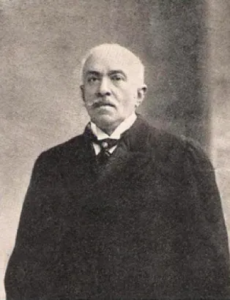
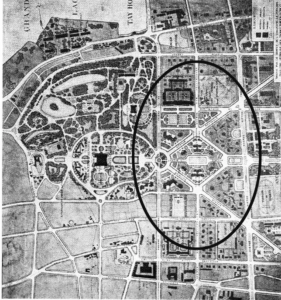
    Ernest Hébrard, who cut his teeth with designs in Greece and Morocco, created a plan in 1926 that organized colonial Hanoi into separate areas for industry, residences, and government buildings — the areas now known as the Old Quarter and French Quarter. Gardens and sports facilities would stretch north around Hồ Tây, the urban lake which was at the time still surrounded by agriculture and small settlements.

    The plan, while never fully realized, is one of many that shaped the 1,000-year-old city. Subsequent influences include Soviet-style urban planning, the austerity period following the war with the United States, and the commercial boom starting in the 1990s that put economic growth well ahead of historic preservation or design considerations.

    Ernest Hébrard

    When the French took control of the area in the 1880s, Hanoi was a dingy river town with faded imperial glory. The colonizers filled canals, drained swamps, and built roads. To demonstrate their power, they tore down the walls and symbolic buildings in the 11th century imperial Citadel, and put a cathedral on the spot of an important temple.

    The new colonial city they built was for the French residents and a small number of Vietnamese elites. Anyone who stood in the way was sent to the Hỏa Lò prison, which first opened in 1886 and would one day be dubbed the “Hanoi Hilton” by U.S. POWs. Eventually, along with global trends, the colonial government wanted to demonstrate a gentler form of mastery, which could win the “hearts and minds” of the locals — at least the elite ones. They called on Hébrard, an architect who was known in colonial circles for city plans in Morocco and Greece. (There’s maddeningly little information about Hébrard today. William Logan’s out-of-print Hanoi: Biography of a City is the most comprehensive source.)

    By the time Hébrard arrived in Indochina in 1921, colonial administrators had Paris in mind for their colonial capital, as well as competion with ongoing development in British and Dutch colonies. Like the planners who upended medieval Paris to lay down modern boulevards, they believed that building a new grand metropolis would be worth the sacrifice of current residents. They weren’t concerned about local unemployment or poverty or social problems like prostitution, which festered out of sight and fueled the growing independence movement. Improving the city was in part a way to counter labor strikes and other civil disobedience against the colonial rulers. At the time Hanoi had about 100,000 inhabitants, including around 3,000 Europeans. (Cited in www.Hanoivietnam.fr.)

    Hébrard’s plan is considered groundbreaking because it blended economics, statistics, hygiene and management. Grand new government buildings would be situated in an area specifically set aside for that purpose. Instead of mixing workshops and small-scale factories amid housing, industry would be in its own zone. Radiating streets and parks would civilize the place. A single large park would extend from the city north to Quảng Bá peninsula — today’s expat-friendly Tay Ho or “West Lake” area. (See Hanoi, a Metropolis in the Making, ed. by Sylvie Fanchette, 2016. For the Hebrard plan, see Nguyen Thi Hoang Lien, in VNU Journal of Science, 2014)

    Section of Hébrard’s plan where Ba Đình Square is today

    For buildings, Hébrard eschewed the prevailing French use of Gothic design — with heavy shapes decorated by ornate gargoyles — that was popular across the colonies. His designs instead incorporated art deco along with ventilation and canopies designed for Vietnam’s climate, a style known as Indochine. Several examples of the buildings still can be seen today: the Ministry of Foreign Affairs building, Cua Bac church, the Museum of Vietnamese History, and Hanoi Science University.

    Modern critics fault Hébrard for segregating Europeans and locals, consistent with colonial attitudes of the time. He apparently ignored the outskirts of the city and showed no interest in housing for the vast majority of Vietnamese. He didn’t widely promote or explain his ideas so the Indochine style, while eclectic, didn’t develop into an indigenous form that would be adopted broadly. Unlike today, there was no idea to engage stakeholders in the planning process.

    Ultimately the colonial governors of the 1920s weren’t dictatorial enough to force Hébrard’s plan through. Budget issues plagued development and then the Great Depression hit. Hébrard left Vietnam in 1929 — within months of the formation of the Communist Party in Hanoi. The radial street grid was partially adopted by subsequent planners, even if it was mostly overtaken by internationalist-style buildings and Soviet-inspired blocks. The Tay Ho neighborhood was left as an untouched agricultural afterthought that gradually developed into today’s popular urban village.

    I would love to find a copy of the Hébrard plan or other related works, which are probably lurking in a used bookstore in Southeast Asia or Europe. I’m adding it to my treasure-hunt list.

    (I orginally published a version of this essay in May 2019 as part of a community history project called Old Tay Ho.)

  • Voting in my hometown

    Seattle's voters took a bold step in 2013 when they decided to begin electing seven of nine members of the city council by district rather than at-large across the entire city. The change meant that challengers with ideas and energy could win by connecting with voters rather than simply collecting enough donations to finance name recognition across a jurisdiction of 650,000 people.

    Leading up to the November 2015 election, three incumbent council members have been defeated or chose to retire rather than face the new district-based challenge. I'm hopeful that regular folks get a stronger voice and it's easier for fresh perspective to make it to city hall.

    Three issues are key now:

    Urbanism and transit. Smarter, more dense building and higher quality transit would help make Seattle a more dynamic city, make it a more affordable place to live and lessen the contribution to climate change. Unfortunately most of the political power in Seattle has backed the single-worst transportation project in memory: the downtown tunnel. Instead of replacing the existing viaduct with dramatically improved transit and making the street grid work better, it would bypass downtown with a tunnel freeway. Today the 60-year-old viaduct remains a serious risk in an earthquake and a huge opportunity has been wasted. Politicians who supported this project despite clear alternatives should be held responsible. 

    Homelessness. Part of building a more vibrant, urban city is taking care of each other. It's simply immoral that thousands of residents in a place as rich as Seattle lack shelter each night. The best way to end homelessness is to provide people with a home through temporary housing and long-term programs. It's dishonest for politicians to say they support more housing and then oppose land-use changes that would create more supply.

    Character. My views on this issue were reinforced by my experience running for Seattle City Council under the old city-wide system in 2011. It matters if candidates stand up for their beliefs and stay intellectually consistent as they absorb new facts. Politics is a way to make positive change in the world; it shouldn't be a game. I support candidates who stand for something

    Though I moved away from Seattle a couple years ago when I joined the U.S. Foreign Service, I still own a house in Columbia City and it's still home. Here's how I'm voting:


    (more…)

  • The view from Mexico City

    A newspaper's front page shows the Mexican military marching in a Bastille Day parade next to a video still of one of the top cartel kingpins escaping from his maximum-security prison cell. The headline cites a top government official blaming deference to human rights – not high-level collusion – for his escape.

    It was a great example of how Mexico often seems focused on the wrong thing.

    24 hrs 2For most Mexicans, the headlines are a tragic amusement. More important is the failure to improve public services, create better jobs or provide basic security in much of the country. Inadequate improvements are the problem.

    I live in a rich neighborhood where the impunity of the well-heeled is everywhere. Cars line up in front of no-parking signs, blocking passage for everyone else. Trucks belch black smoke while individuals have to pay for emissions tests twice a year. In traffic the operative phrase is "you first, after me." Forget about safe sidewalks and neighborhood parks: everyone gets their own without concern for the commons.

    My carpool partner, a Mexican nearing retirement, says she tells her university-educated kids to leave the country because there’s no future. She notes that the peso is at a record low and public confidence in the government at the lowest in a generation.

    (more…)

  • New talent coming (finally!) to City Hall

    Longtime Seattle politicians are deciding to retire rather than face reelection under a new district-election system that requires them to talk to voters instead of just raise money.

    This is great news. City hall will get new talent and may ultimately be more responsive. There’s at least a chance for smarter transit and other policy that reflects the more urban city Seattle is becoming.

    I’m excited about the news elsewhere this week, too. In New York the longtime assembly speaker Shelly Silver is finally on his way out after being charged with $4 million in shakedowns – an open secret that everyone in local politics there long suspected but wouldn’t mention. In my current home, Mexico City, local elections got underway, less than 20 years after residents were first given power to directly pick their mayor. The energy at the local level seems in contrast to frustration with state and federal corruption and crime.

    Simpsons_mobSeattle thinks it’s more innovative than either of those places. But in fact its council mostly represents people who benefit from the status quo. There’s been only one upset in recent years. Most of the time incumbents raise so much money that they scare away most challengers.

    The new system leaves two of nine council seats electable citywide, a constituency of 640,000 people – the size of a congressional race – that costs serious money to reach. As a result they’re in hoc to the several hundred mostly conservative donors who can write the maximum $700 check for their campaigns. These donors were largely behind the disastrous downtown tunnel project since many of them stood to gain.

    (more…)

  • Read this before running for office

    When I first saw a copy of Fire and Ashes, Michael Ignatieff’s recent book about his experience trying to become Canada’s prime minister, it seemed too decadent to actually pick it up.

    It was the sort of book I’ve mostly avoided in the three-plus years since my run for city council in Seattle. It has seemed more productive to focus on other ways to contribute the community, including my new career as a Foreign Service Officer.

    When I finally gave in and bought a copy of Ignatieff’s book, however, I could hardly put it down. I found myself highlighting passages every few Kindle pages and pondering each episode. It may be the best book about participating in politics since Richard Ben Cramer’s What It Takes – and a must-read for anyone thinking about running.courtesy filmreference.com

    Ignatieff, a well-known political science intellectual, left a tenured position at Harvard after, as he puts it, being recruited to return to Toronto to run for office.

    After 31 years outside Canada, the plan was to eventually become head of the storied Liberal Party and lead it to victory, becoming prime minister. Instead he led the party to its worst-ever defeat.

    The book is personal, almost self-indulgent: you have to be in order to run for office. While the parallel to my experience has limits – he actually won a seat and became party leader, after all – the book is applicable for any level of politics. It hits several essential ideas:

    (more…)

  • At the Equator, a surprising transit role model

    When it comes to bold transit, Quito is a city to watch.

    The capital of Ecuador is building a 15-station underground metro that will complement an existing system of bus rapid transit (BRT), transit lanes and cycletracks. This makes sense for the traffic-clogged city of 2.5 million, situated in a narrow valley at 9,300 feet — a city looking for ways to combat sprawl and become more equitable.

    Quito's subway and BRT

    Quito's BRT and subway (dotted red line)

    During my visit a few months ago I found impressive transit and progress toward focusing urban development around the new subway infrastructure.

    Cities in Colombia and Brazil have attracted international attention for decades because of their BRT systems, where passengers pay their fare before entering the bus platform and where buses travel in dedicated rights of way. With the combination of BRT and subway, Quito also merits attention for its transit (not to mention its great climate and chocolate).

    Transit critics often point to BRT as a better alternative to expensive trains, though few U.S. cities have succeeded in implementing it well. In fact, the debate over which mode is better is pretty silly unless the real goal is delay or prevent significant transit expansion. Unlike almost anywhere in the U.S., Quito's subway should dramatically add capacity, provide vastly improved mobility and long-term cultural benefits

    Quito

    The goal: Connecting the Quito valley

    Quito's transit is especially stunning in comparison to the high cost and gradual results in much wealthier U.S. cities. For example, Washington, D.C. this week opened a five-station extension of its Metro system deeper into the Virginia suburbs — after two decades of discussion and $2.9 billion sunk so far. Seattle is building a light rail system that avoids key destinations, is slowed by at-grade street crossings and marred by inefficient design. For example, light rail stations aren't convenient to buses and there's minimal coordination with zoning. Both systems fall short of their potential as catalysts for more sustainable urban areas.

    In contrast, the first $1.5 billion phase of Quito's subway will fundamentally alter the city when it opens in 2017. A single line is projected to carry 380,000 riders per day, partly by attracting people who won't take overcrowded buses and partly by providing mobility to increasingly dense parts of the city. The line zig-zags across the valley connecting existing parallel BRT lines.

    The subway can be seen as part of recent, larger public investments aimied at alleviating poverty and improving public heath and education. At a new public community center in a poor neighborhood near downtown Quito, an interactive map of the region shows future transit routes and their impact on the city. The center, a striking building with play and fitness areas as well as classrooms, is itself a sign of how infrastructure spending in the country seems targeted at common citizens.

    BRT in Quito

    BRT station in central Quito

    In addition to potential future subway lines, Quito's transit to-do list is long. Existing BRT lines are fast and logical — traits many U.S. transit systems could learn! — but also overcrowded and dirty. It seems like every Quiteño has a story of brazen pickpocketers on the buses. Though the system has dedicated lanes and signal priority, additional investment in bus-only flyovers to overcome congested intersections would help a lot. 

    Of course, there's local criticism of the subway project, mostly along the lines that it's not cost effective. However the subway project was unchanged during a handover in political power following Ecuador's local elections in February. Voters protested President Rafael Correa's ruling partry nationwide by installing opposition mayors in numerous cities, including Quito. Yet the popular subway moves forward.

    While Latin America has had subways in places like Mexico City for years, analysts have suggested that the future in fast-growing cities is buses. Yet Panama City, a major financial hub, opened Central America's first subway line in March with strong ridership. Quito, which should be the region's next metro, is likely to provide an example of how bold investments pay off.

  • A city that’s trying harder

    I recently had a chance to visit Fallingwater, Frank Lloyd Wright's masterpiece in southwestern Pennsylvania, and it was even more impressive in person that I had dreamed. More surprising, however, was the time I got to spend in nearby Pittsburgh.

    Ahead of the trip, friends laughed when I said I was going to Pittsburgh for the weekend. Despite plenty of recent good press, the city often still provokes stories of pollution and declining industry. I recall a New Yorker consoling me after the Steelers beat the Seahawks in the 2005 Super Bowl: Pittsburgh NEEDS that win much more than Seattle, she said. downtown Pittsburgh

    Image aside, during my short trip I found a livable city that's doing a lot of the right things for its future:

    Mixing housing and commerce. We stayed in the new Bakery Square complex in the city's eastern end, where Google and a bunch of other tech companies mix with retail (mostly national chain, unfortunately) at a long-defunct Nabisco plant. According to locals, the project, which opened in 2010, has spurred development in the immediate area, connecting to surrounding neighborhoods. Much of Pittsburgh has narrow, walkable streets with close-together housing. We found shops lining the major streets, and many areas activated by pedestrians at all hours.

    (more…)

  • Changing how we get around US cities

    As I've started preparing to move to Mexico City, I've been thinking more about the form of cities in the United States, how we got this way and how we might change.

    The other day I made the following points in a Spanish presentation about transportation in the U.S. changing neighborhood preferences. courtesy of kathleenfinnegan.com

    The majority of U.S. cities are designed to move cars. Yes, many older cities have well-known infrastructure like trains and subways but for many decades most of the investment has been in roads and parking. Alternatives like trains, buses, biking and walking are still novel in the grand scheme. Even in Portland, which famously adopted light rail in lieu of building a new freeway, the train is often considered a dangerous, poor-man's way to get to the airport.

    However there are four factors that could change the form of urbanization and build support for a new approach to getting around.

    First, traffic will get worse. We can't build enough roads and highways because of induced demand.

    Second, the cost of driving will keep rising. The high price of gas and the cost of lost time spent in traffic will get more difficult to accept. In my last job I commuted 25 miles each way through Seattle-area traffic — it's soul-crushing.

    (more…)

  • Is the Beltway our future?

    Until several months ago I thought of Washington, D.C. as a great urban success. With its booming, diverse economy, urban core and globalizing culture – all tied together by enviable transit – it has so much to offer.

    95 & 495 interchange. Courtesy of capital-beltway.comHowever every time I’m on the Beltway, experience the sprawl of Virginia and Maryland or travel on massive new highways built while transit stalls, I’m not so sure. Do most people consider this growth pattern progress?
     
    I’ve spent a lot of my free time attending events on urbanism and reading about design, development and growth. I’ve seen that many ideas I promoted during my city council campaign are applicable all over, especially considering that 70% of the world’s population will live in cities within 30 years. Two recent events brought this into clear focus for me.
     
    During a lecture here by Witold Rybczynski to promote his new book, How Architecture Works, he shared examples of exquisite stairways and spaces ranging from the new addition to Fort Worth’s Kimball Museum to houses in California. Good architecture is a miracle when it happens, he said, but it doesn't happen often. It’s a fair point, but seems too narrow.

    (more…)